
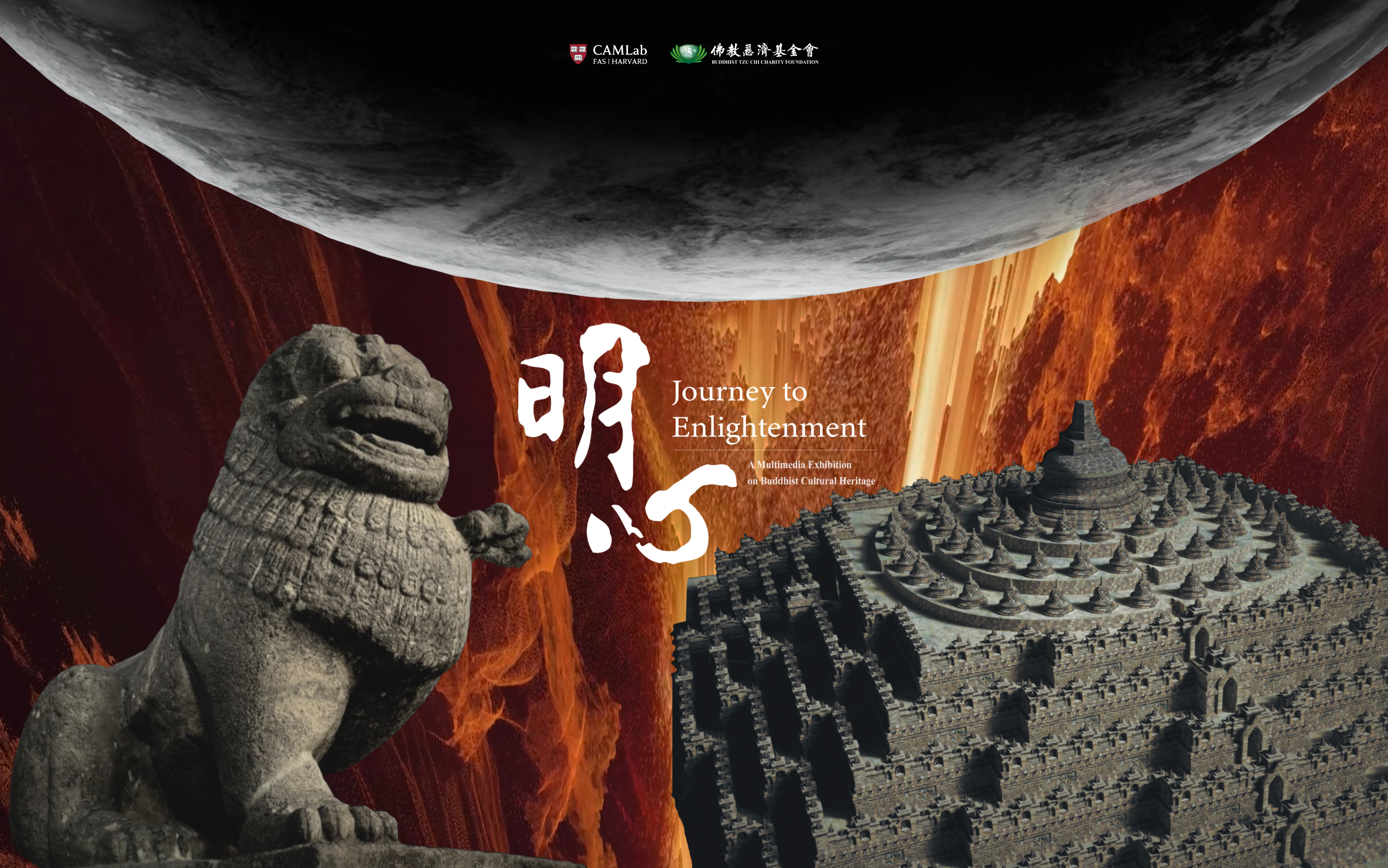
Journey to Enlightenment: A Multimedia Exhibition on Buddhist Cultural Heritage unfolds across three international venues, inviting audiences to engage with Buddhist history, philosophy, and contemporary practice through immersive media and public programming.
Journey to Enlightenment: A Multimedia Exhibition on Buddhist Cultural Heritage is an immersive, research-driven exhibition that traces over 2,500 years of Buddhist history, from its origins in early South Asian sacred sites to its continued expression in contemporary humanitarian practice.
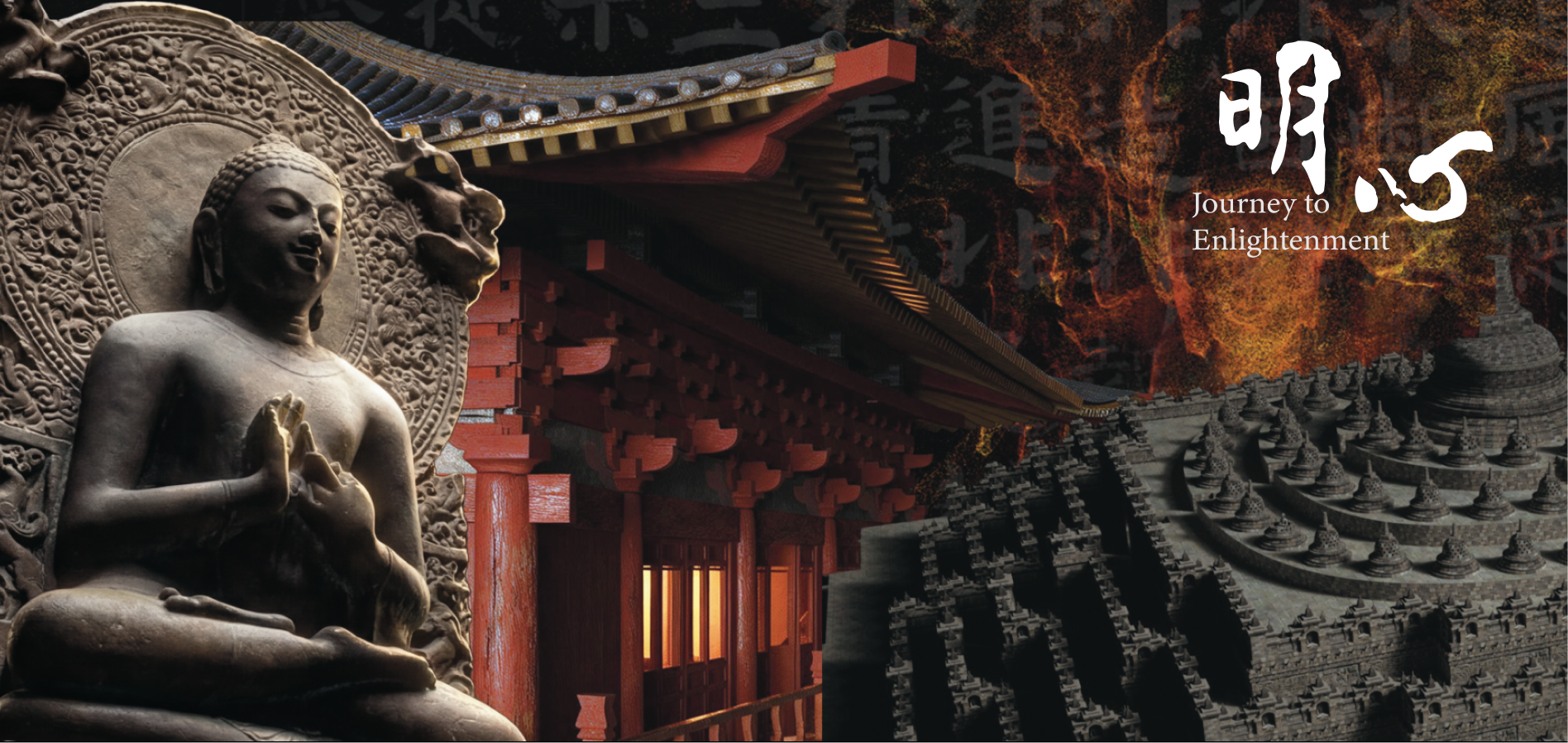
Co-curated by Harvard FAS CAMLab and the Buddhist Tzu Chi Charity Foundation, the exhibition brings together art historical research, religious studies, and advanced digital media. Through immersive projection, spatial audio, and high-resolution digital reconstruction, it reinterprets major Buddhist heritage sites as experiential environments—transforming them from distant monuments into living spaces of cultural memory, ethical inquiry, and sensory engagement.
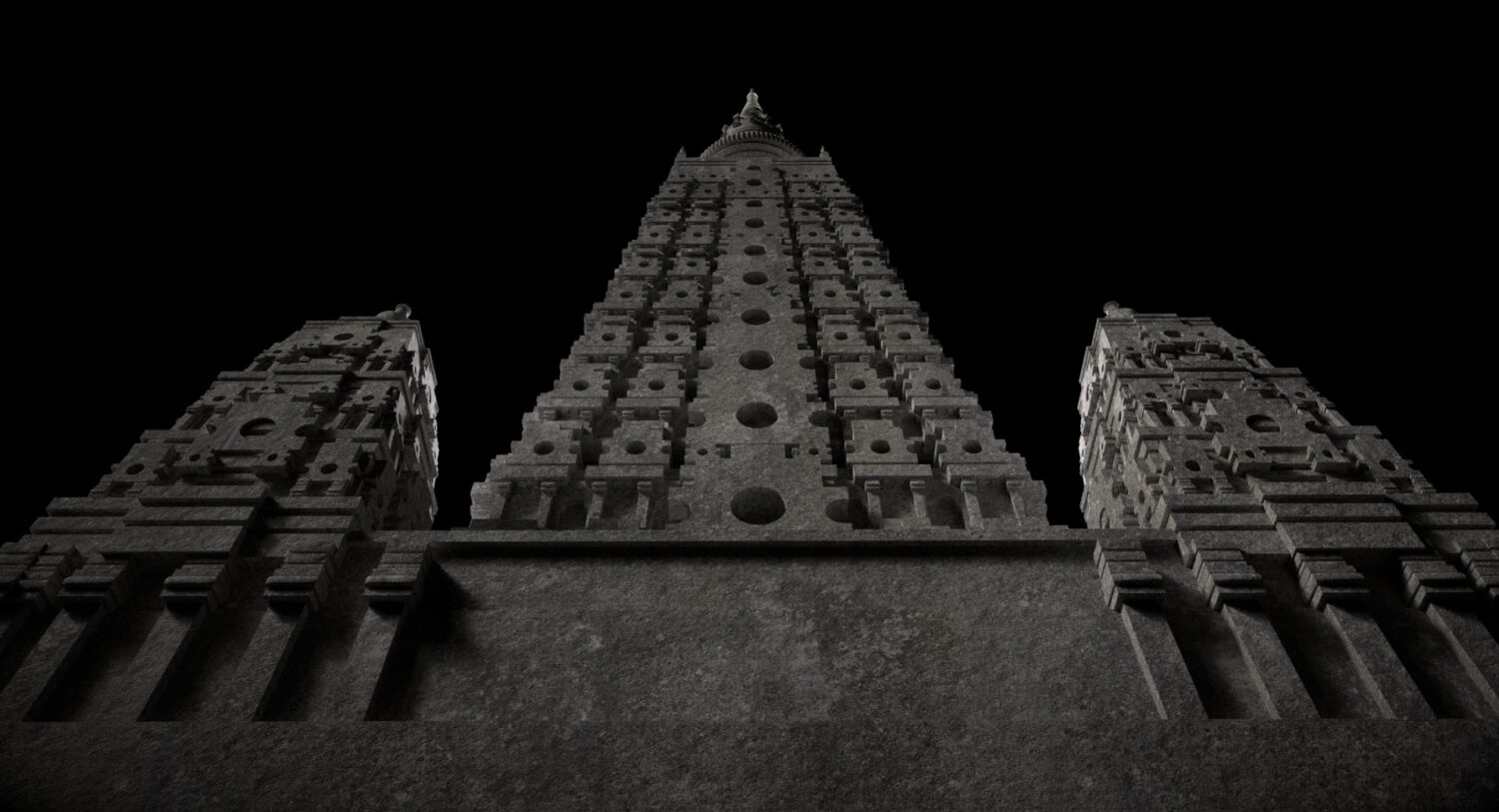
Located in Bihar, India, Bodh Gaya marks the site where Siddhartha Gautama attained enlightenment beneath the Bodhi tree. The Mahabodhi Temple, established by Ashoka and later rebuilt in the Gupta period, preserves the Vajrasana, or “Diamond Throne.” As a UNESCO World Heritage Site, it represents the transformation of existential suffering into insight and the foundational moment of Buddhist awakening.
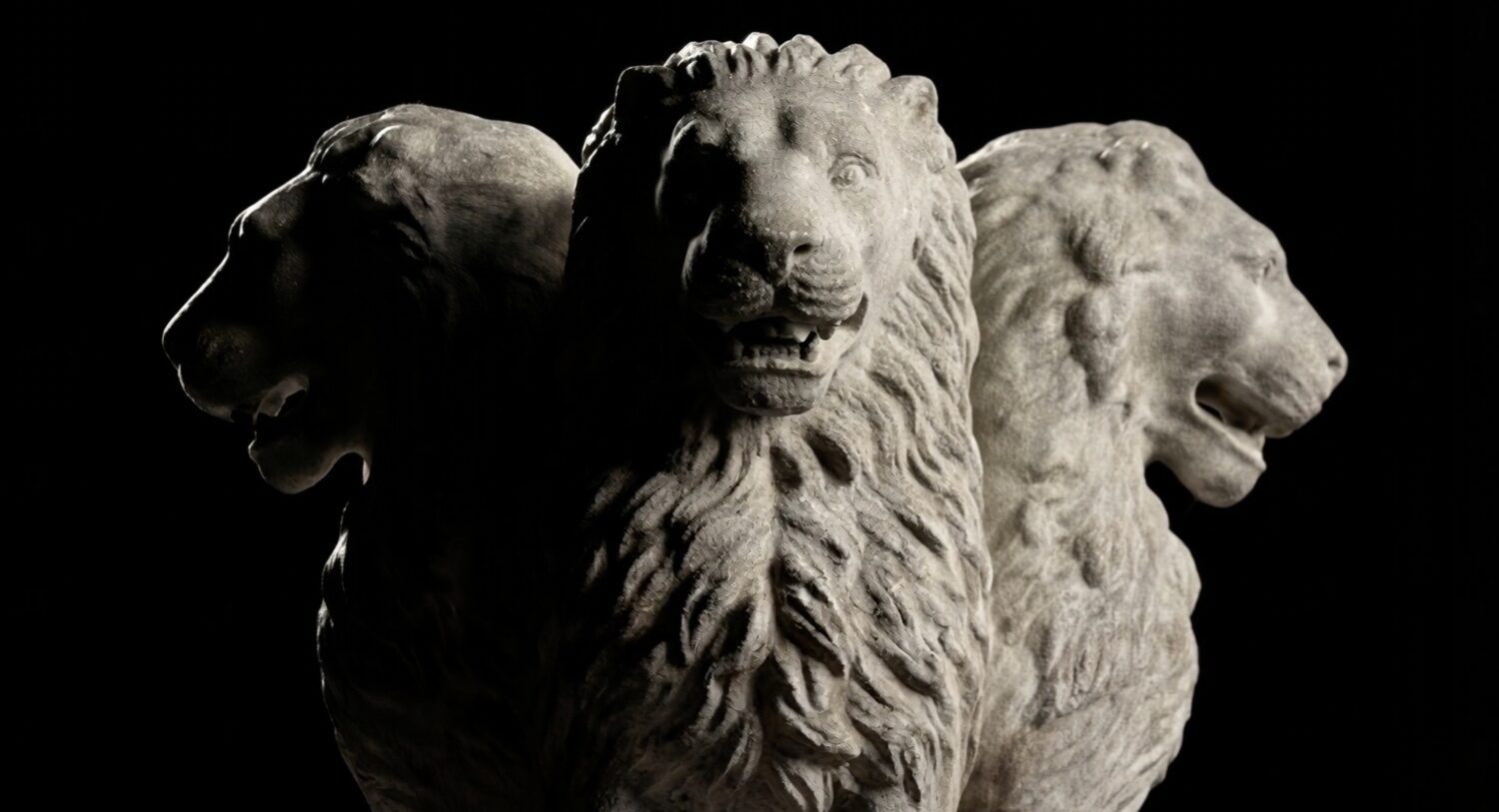
Near Varanasi, Sarnath is where the Buddha first taught the Four Noble Truths, initiating the “turning of the Wheel of Dharma” and establishing the Buddhist community. Flourishing especially during the Gupta period, the site produced refined sculptural traditions, including Dharmachakra mudrā images. Archaeological remains such as stupas and monasteries underscore its role as a major center of teaching, pilgrimage, and doctrinal transmission.
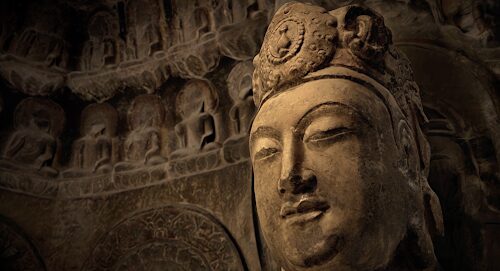
Sites such as the Xiangtangshan Caves(6th century, Northern Qi) demonstrate how Buddhist scriptures were embedded in architectural space. These caves preserve early inscriptions of the Lotus Sutra and the Immeasurable Meanings Sutra, integrating text, sculpture, and ritual. Supported by imperial patronage, they exemplify how doctrine became spatial practice, transforming caves into immersive environments for contemplation and embodied engagement.
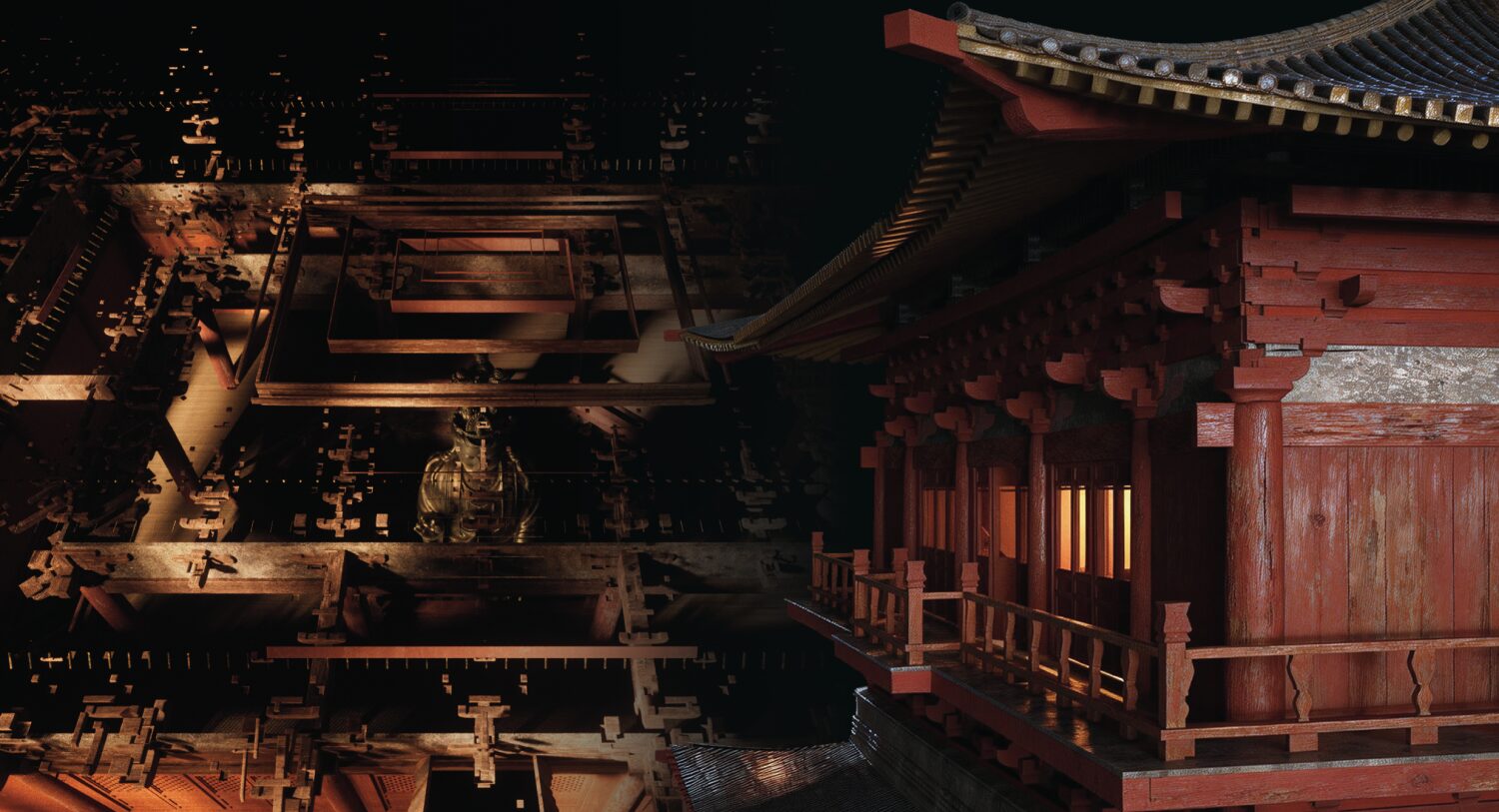
The Dule Temple Guanyin Pavilion (984 CE, Liao dynasty) houses a monumental Eleven-Headed Guanyin statue, one of the largest surviving clay sculptures in China. As an early timber-structure pavilion, it reflects advanced architectural techniques. Although this Guanyin statue does not fully realize the thousand-armed form, it nevertheless symbolizes boundless compassion, representing the shift from devotional imagery to lived, collective humanitarian practice.
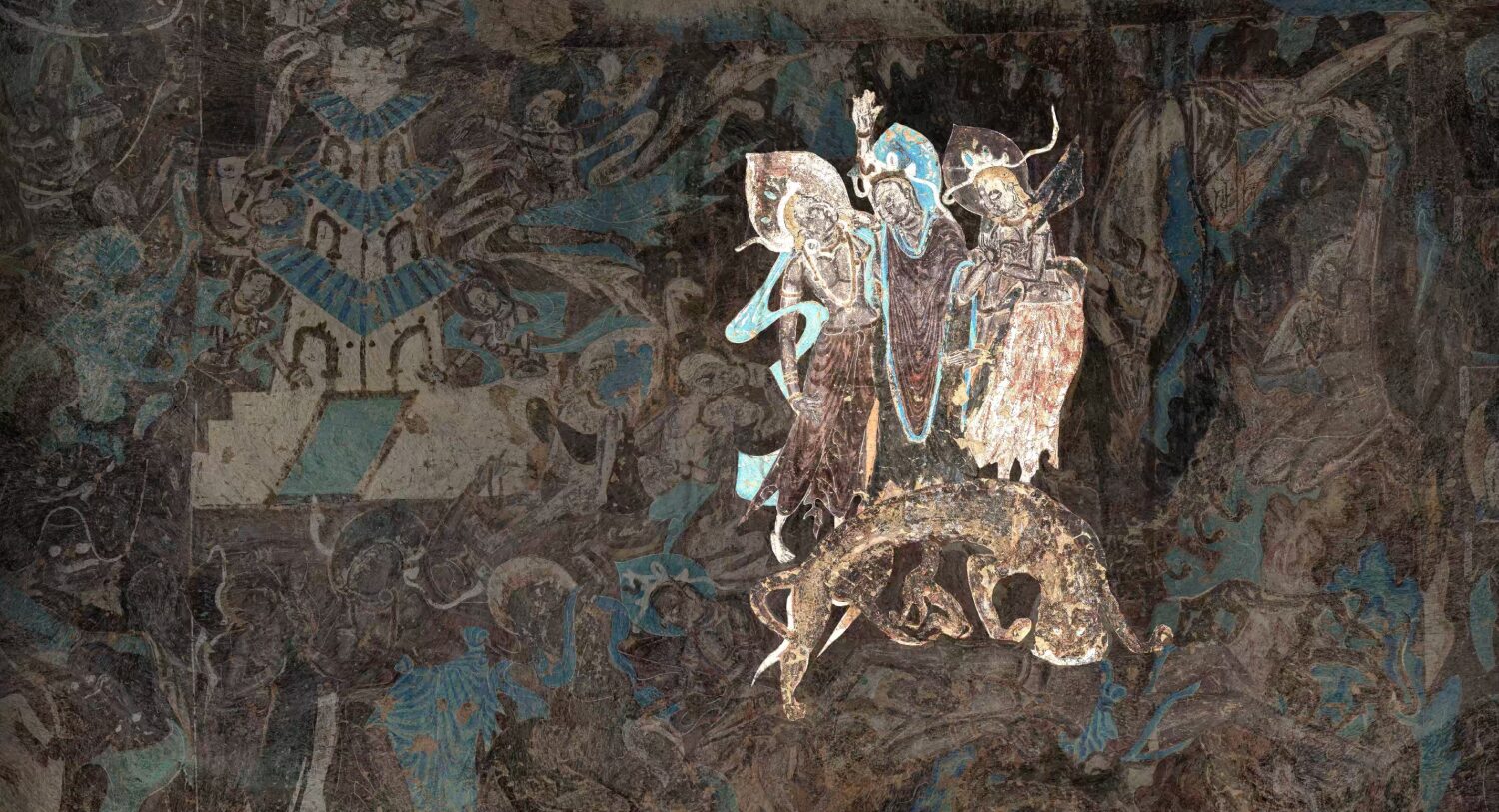
The Mogao Caves at Dunhuang, a UNESCO World Heritage Site, preserve extensive Buddhist mural traditions. Cave 254 (Northern Wei, 5th century) features Jātaka narratives such as self-sacrifice and bodily offering. Through sequential visual storytelling, these murals transform ethical teachings into immersive experiences, illustrating the Buddhist ideal of generosity and the radical expression of compassion through selfless giving.
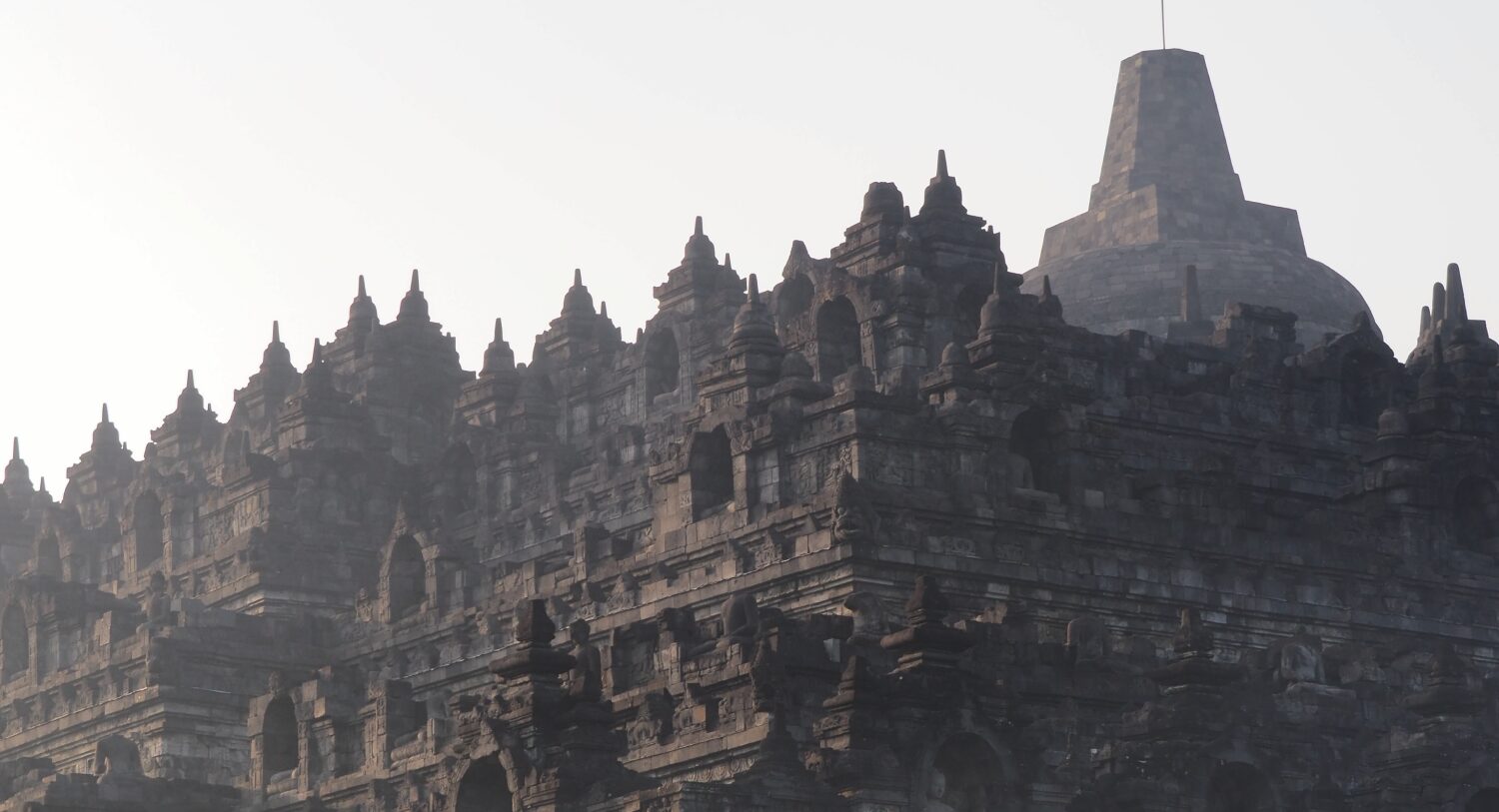
Borobudur (8th–9th century, Indonesia) is the world’s largest Buddhist monument and a UNESCO World Heritage Site. Constructed as a three-dimensional mandala, it integrates architecture with cosmology. Its extensive reliefs depict texts such as the Great Expansive Buddha’s Flower Adornment Sutra, guiding pilgrims through a structured spiritual journey in which movement, narrative, and space collectively function as a pedagogical system.
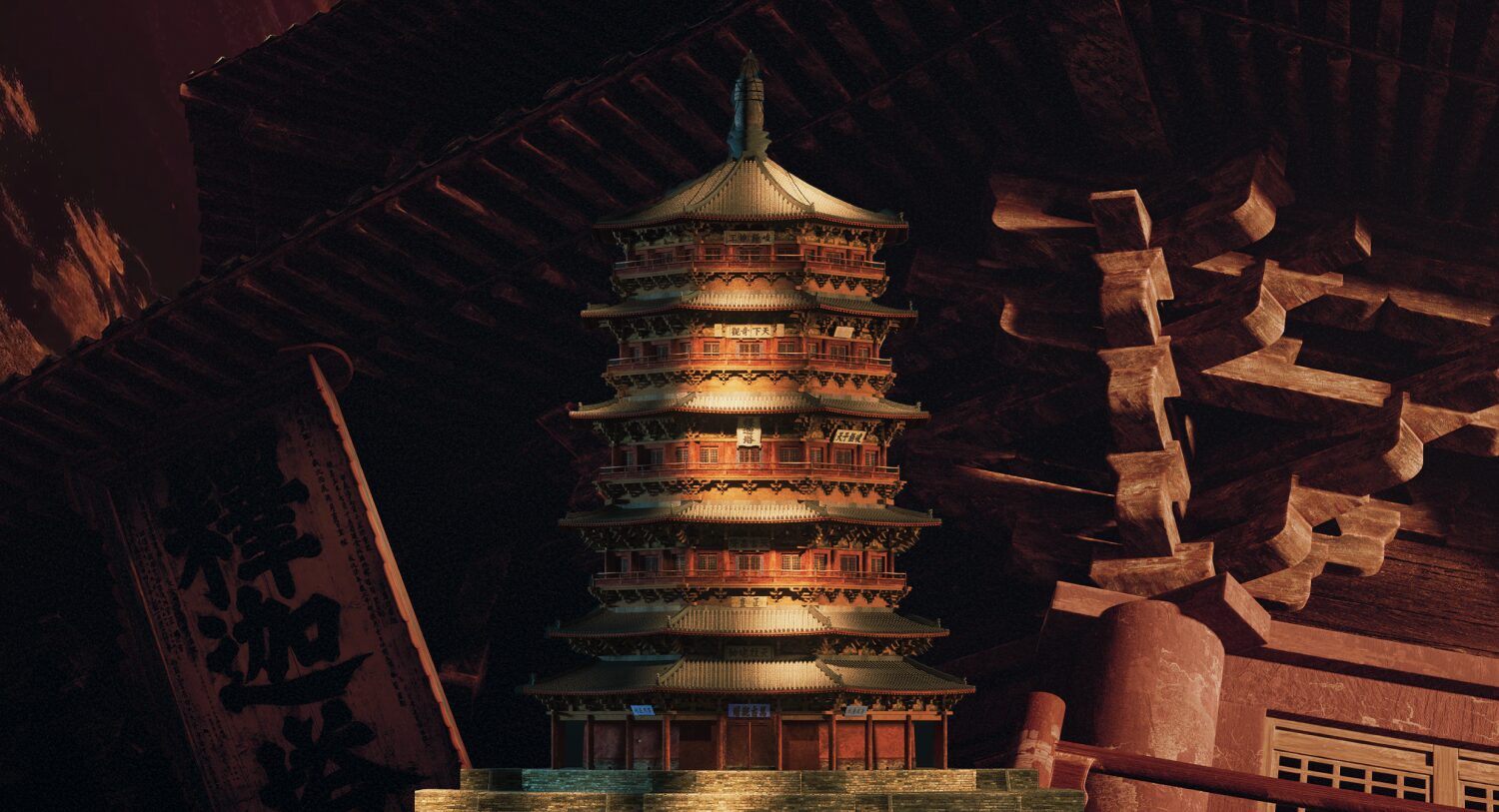
The Yingxian Wooden Pagoda (1056 CE, Liao dynasty) is the tallest and oldest surviving wooden pagoda in China. Built without nails, its complex timber framework demonstrates remarkable engineering resilience. Philosophically, it reflects Huayan concepts of interdependence, where each structural element supports and reflects the whole, embodying a material expression of relational ontology.

Vulture Peak (Gṛdhrakūṭa), near Rajgir, is an important site of the Buddha’s teachings and associated with key Mahāyāna texts such as the Lotus Sutra. Beyond its historical role, it symbolizes an enduring space of teaching and transmission. In Buddhist thought, it represents an expansive cosmological horizon, situating enlightenment within an ongoing, future-oriented framework.
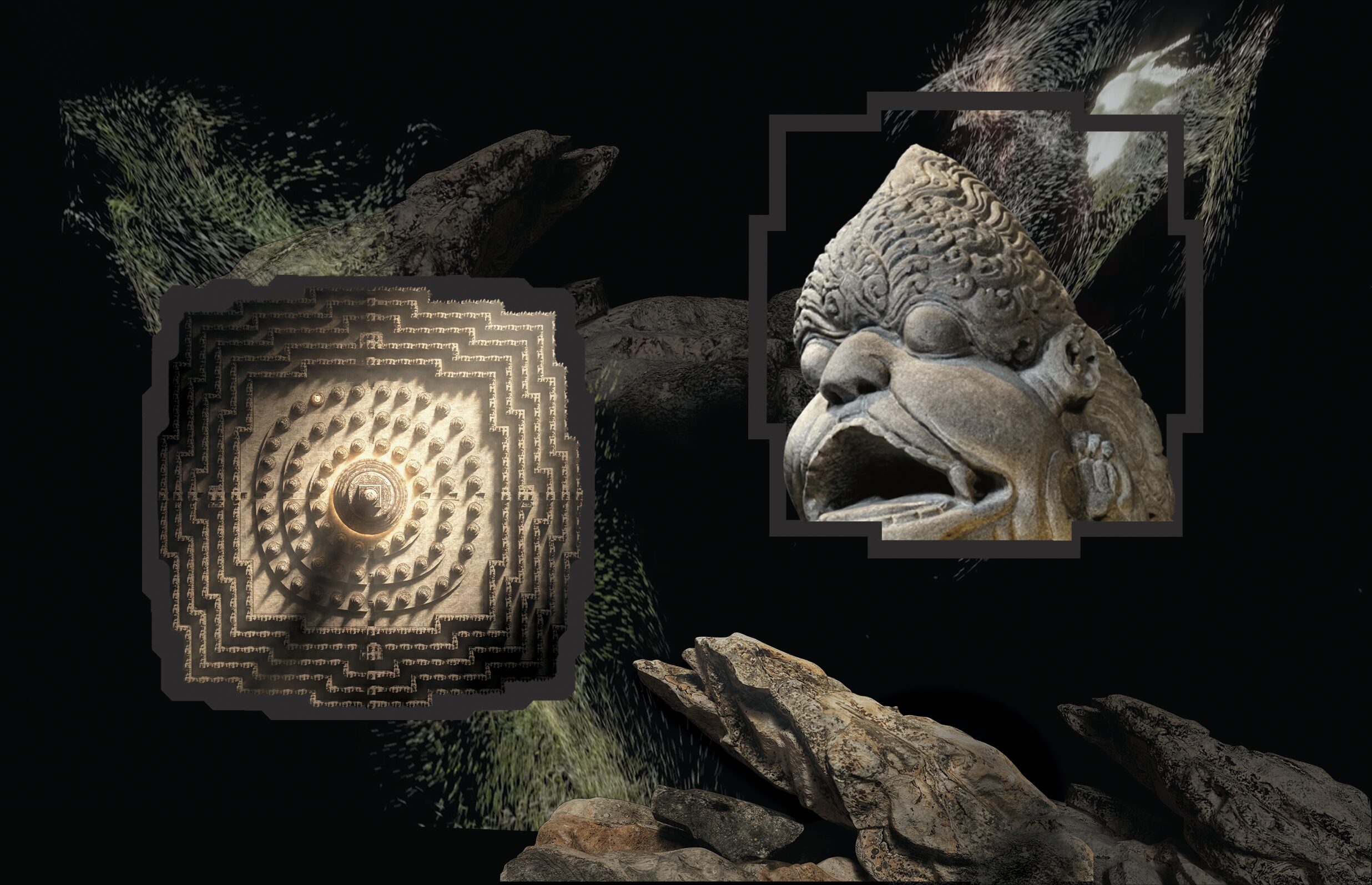
Through technologies such as 3D scanning, immersive projection, and interactive storytelling, the exhibition reconstructs geographically dispersed and historically layered sites within a unified experiential framework. These digital methodologies not only support preservation, but also enable new modes of interpretation and public engagement.
In this context, digital media functions as a critical bridge between past and present—transforming archaeological and historical knowledge into embodied experience.
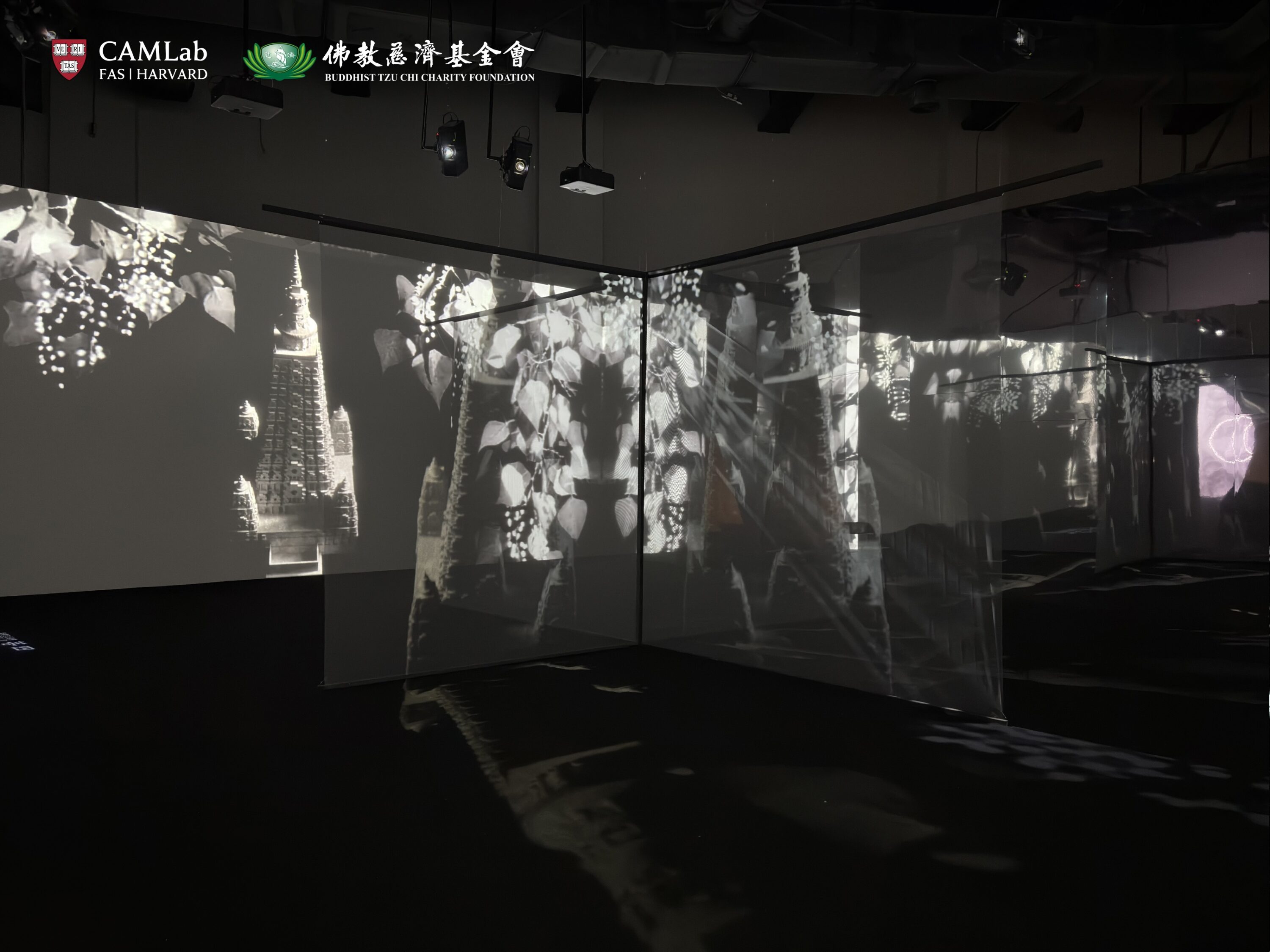
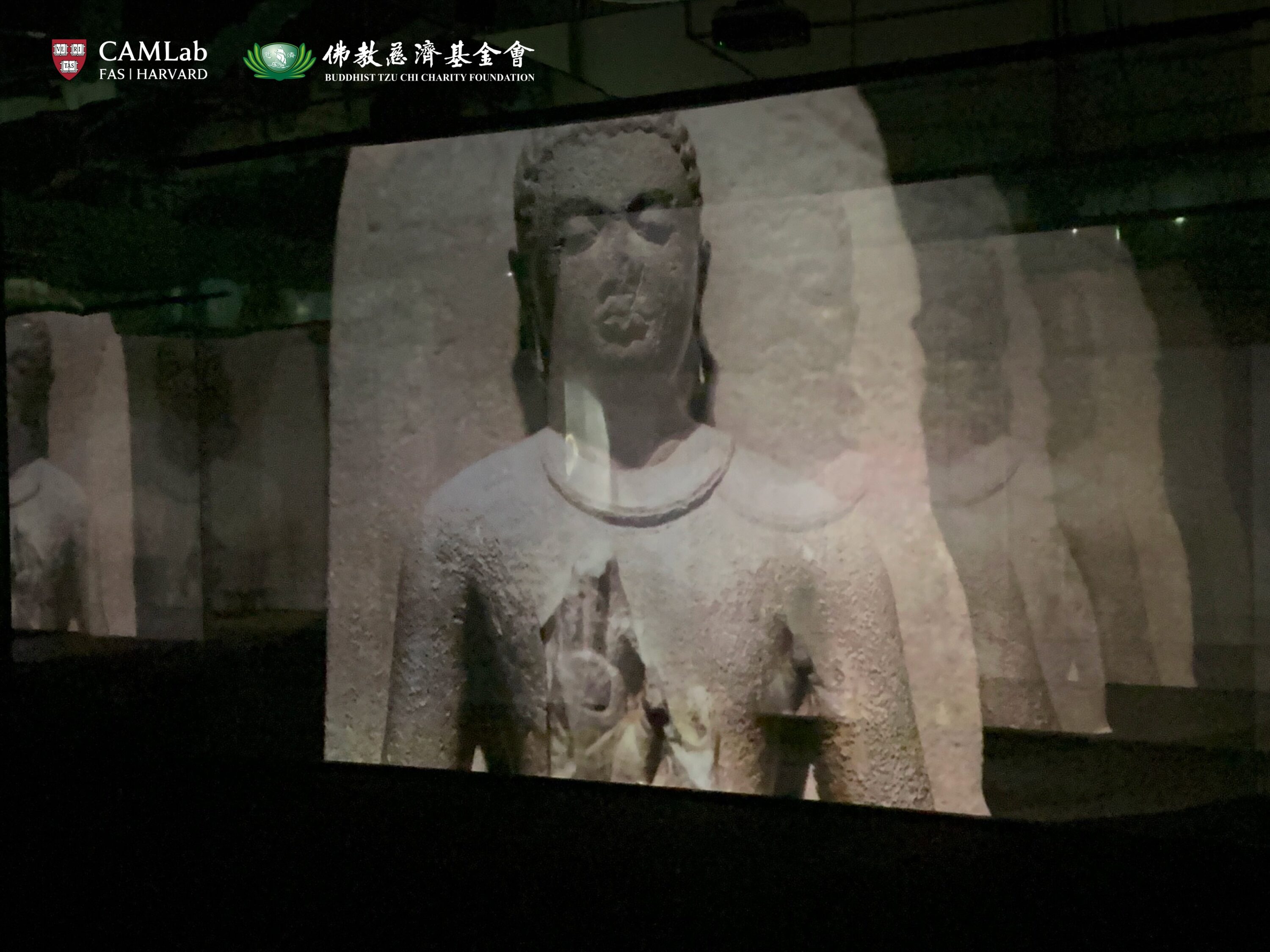
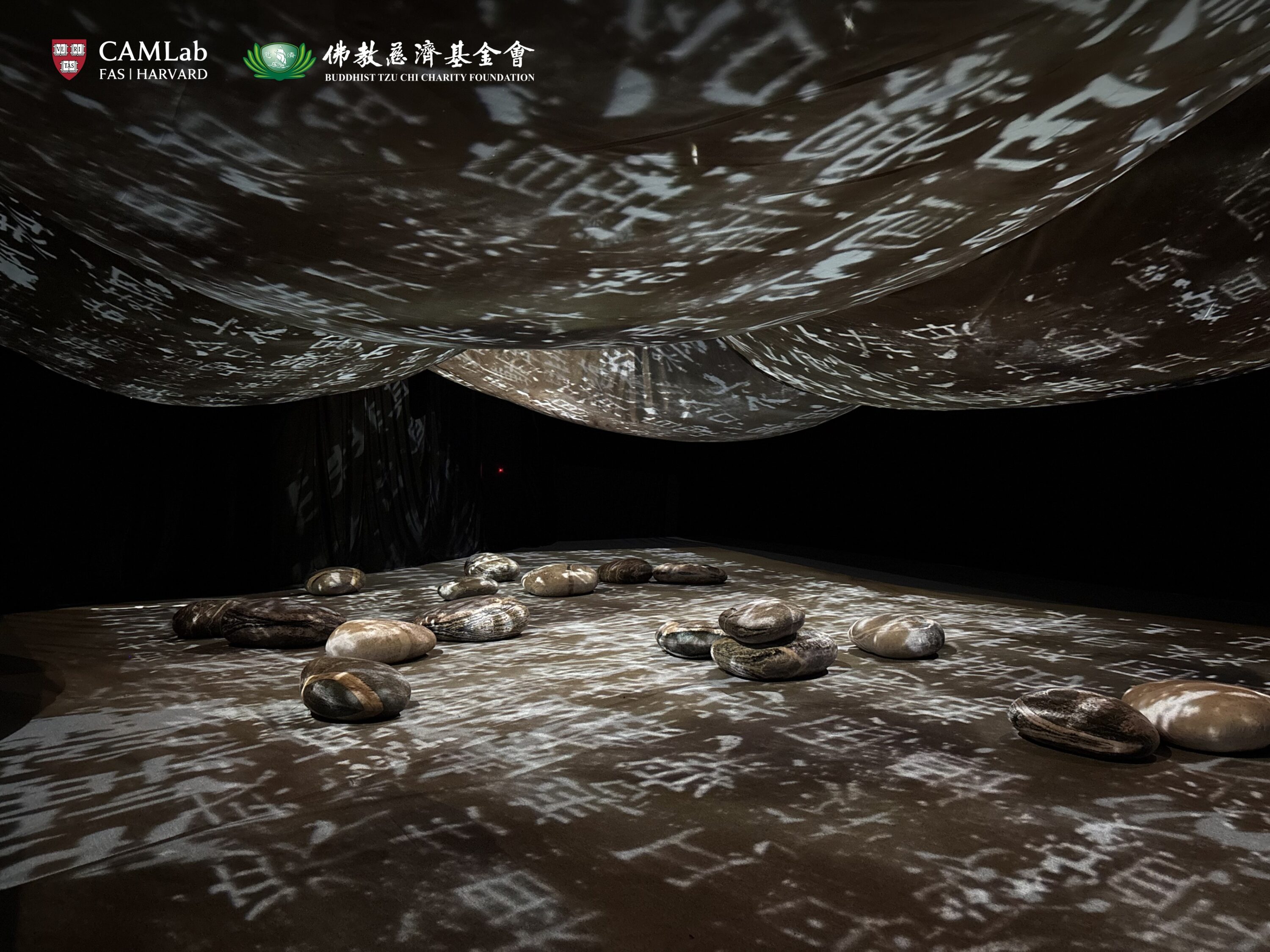
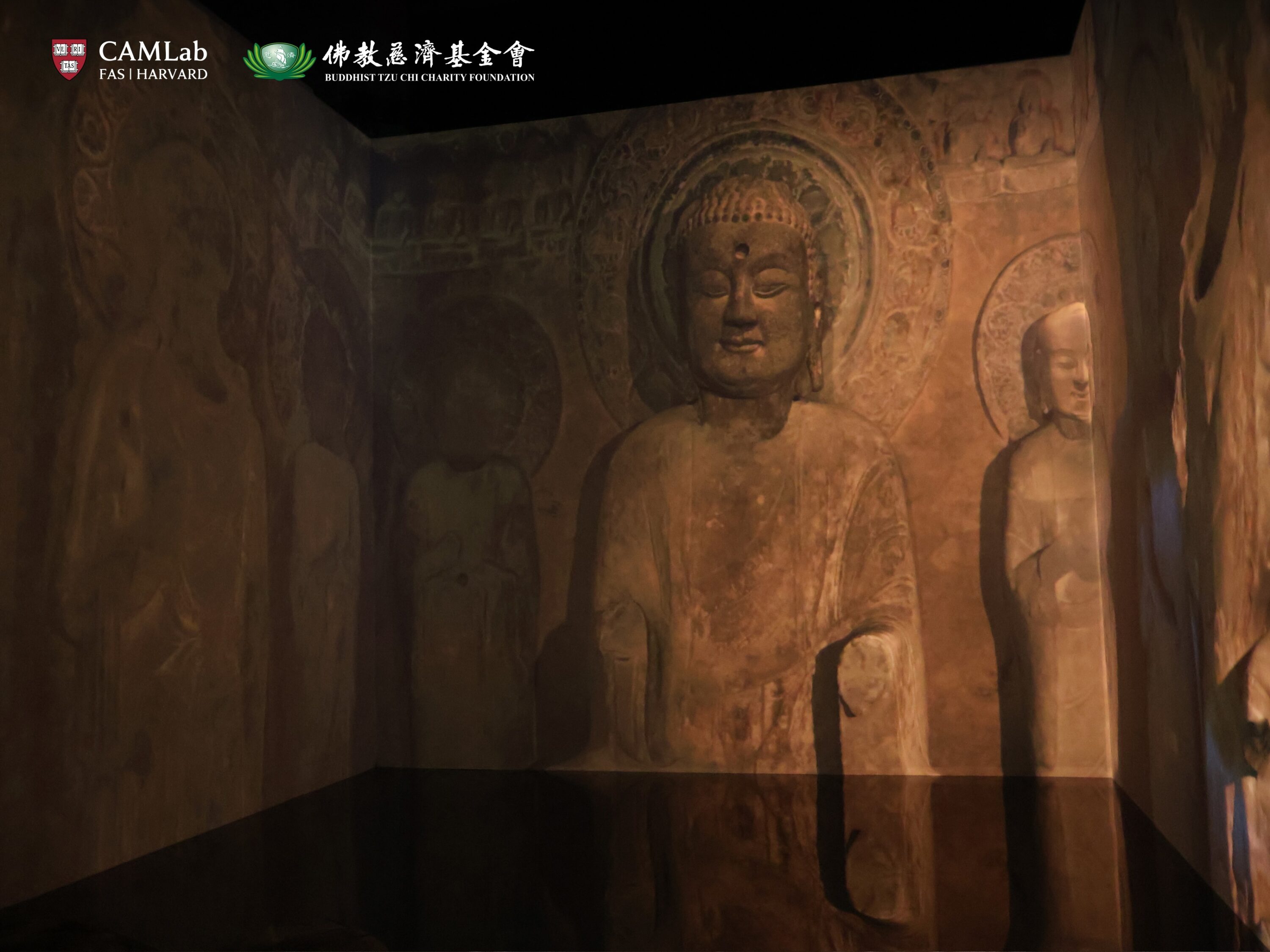
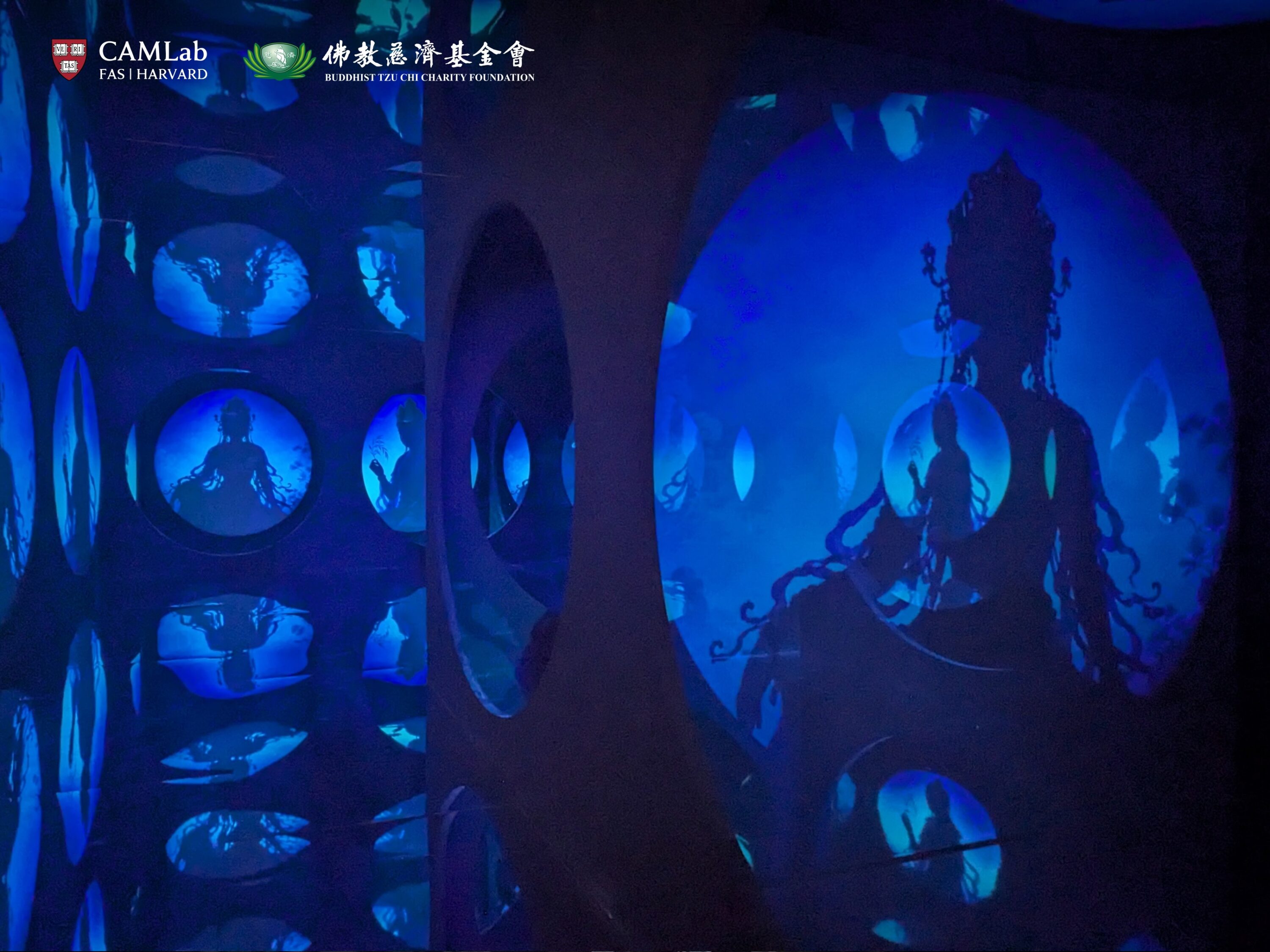
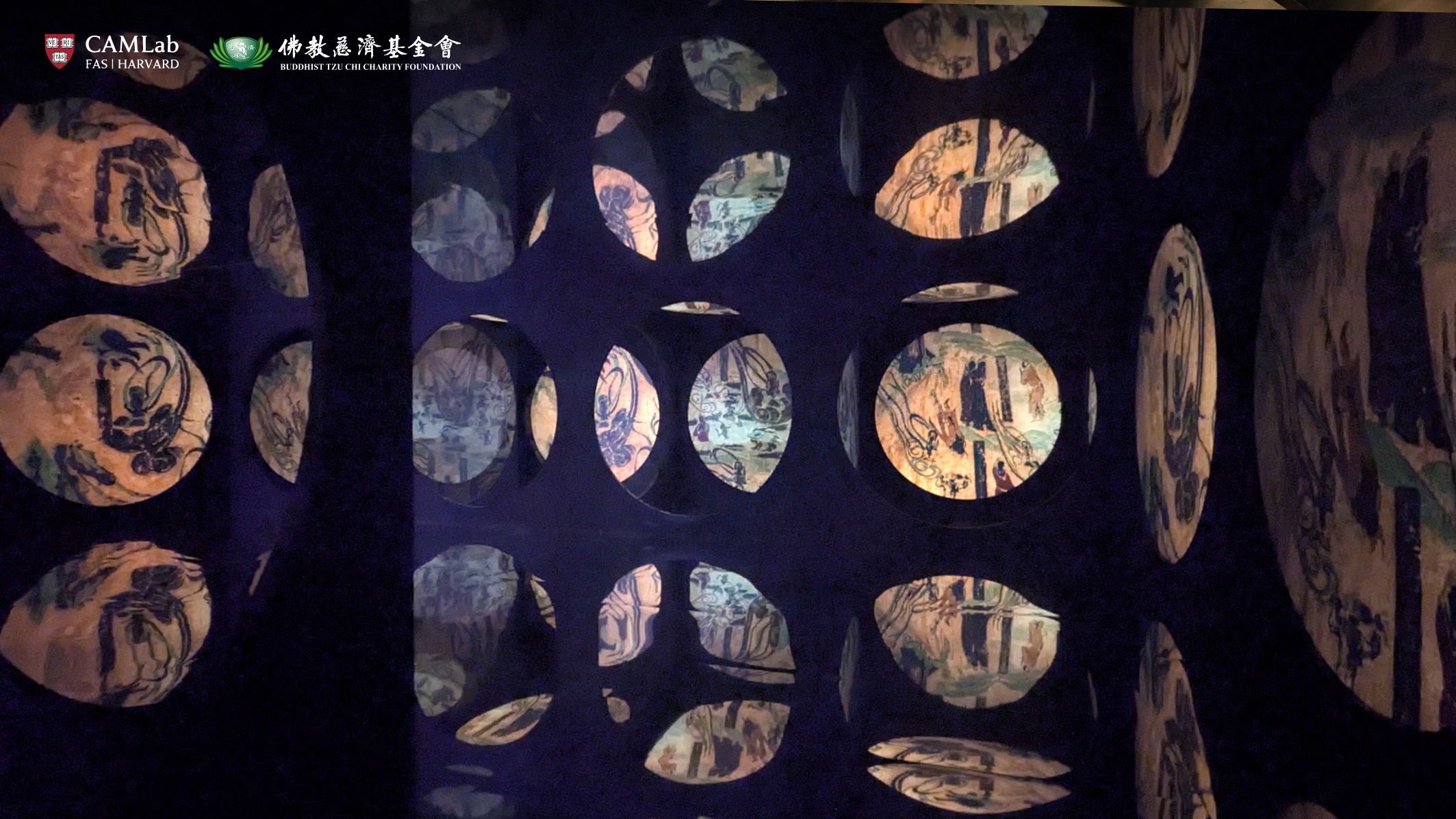
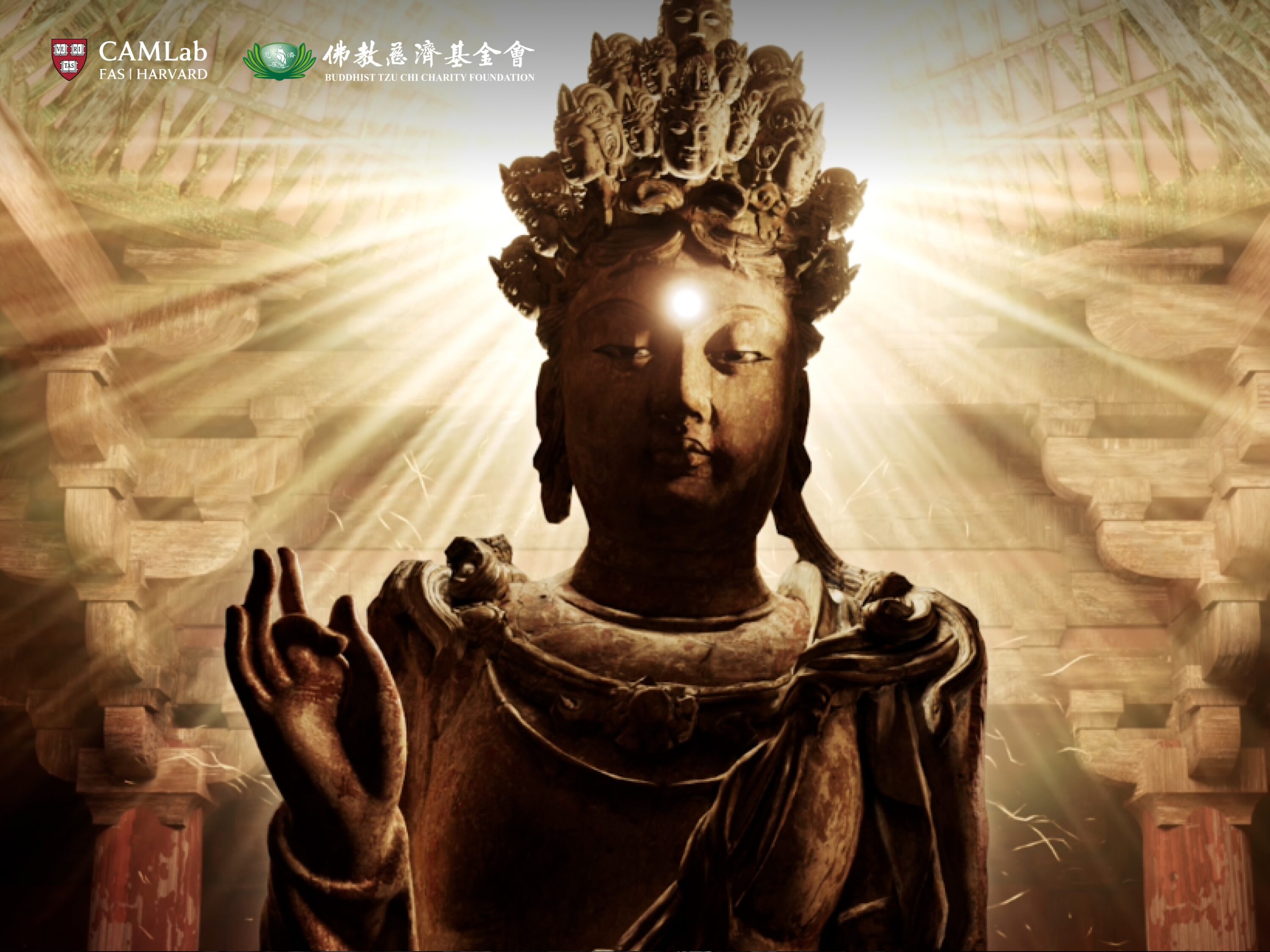
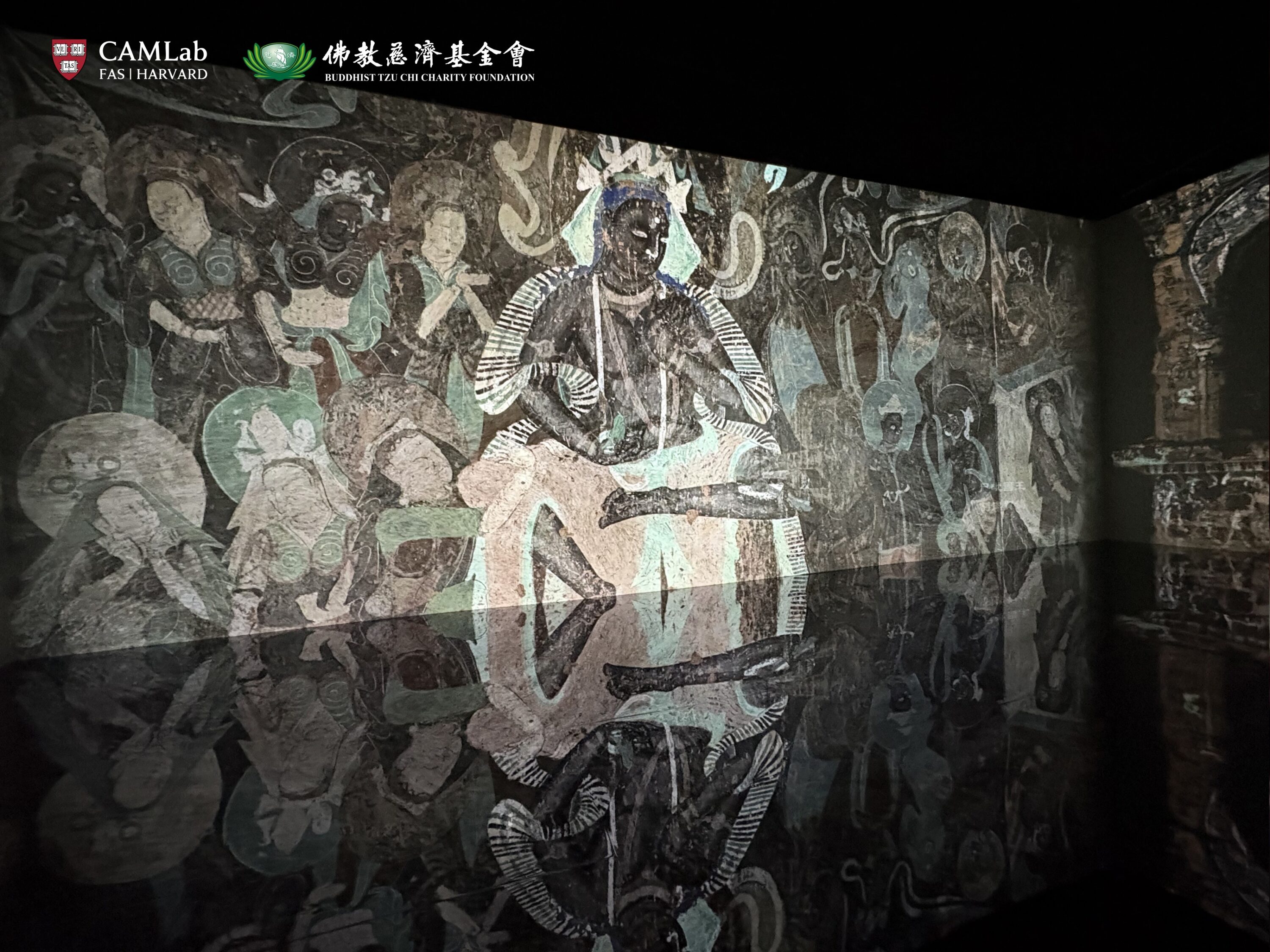
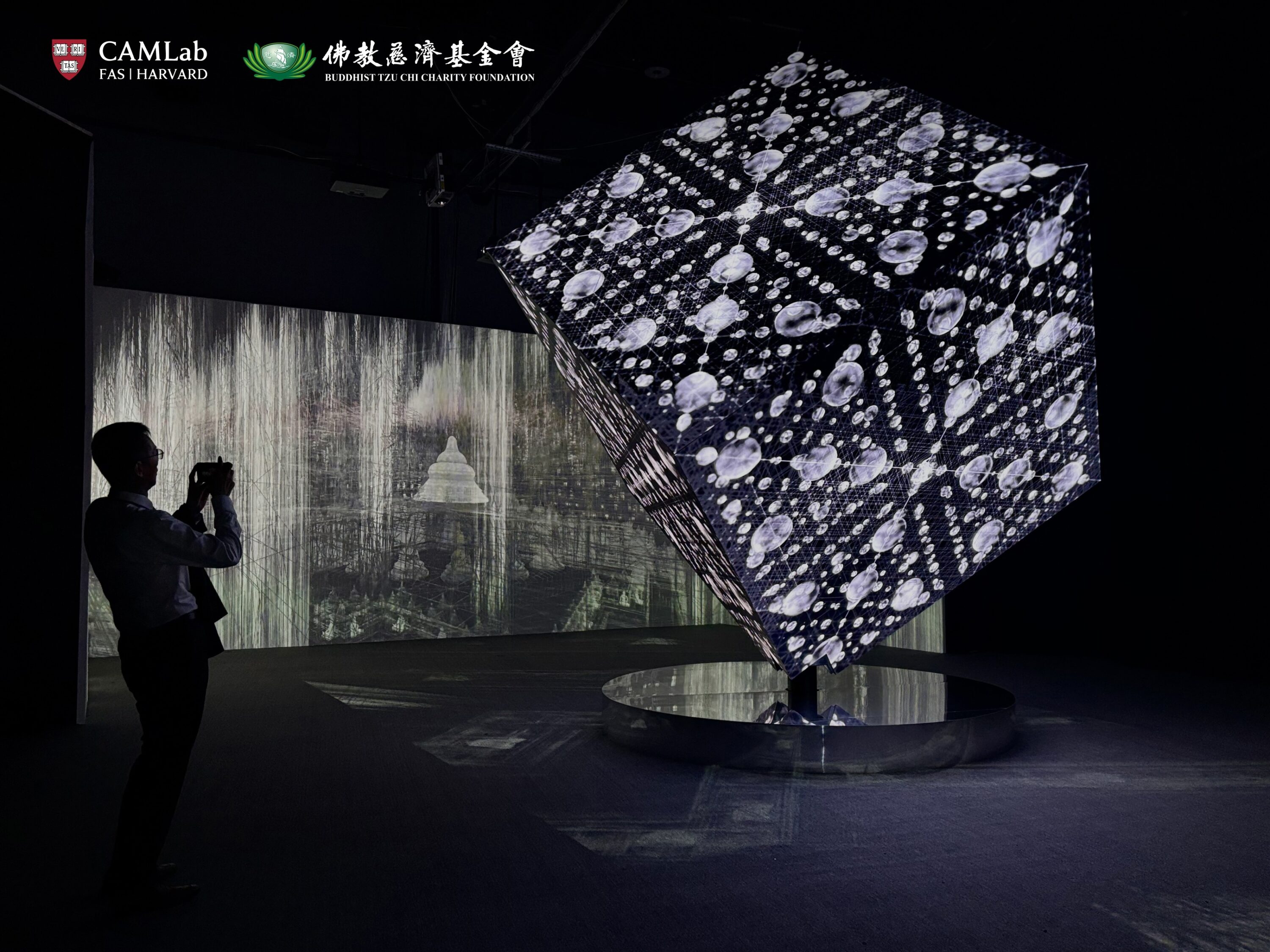
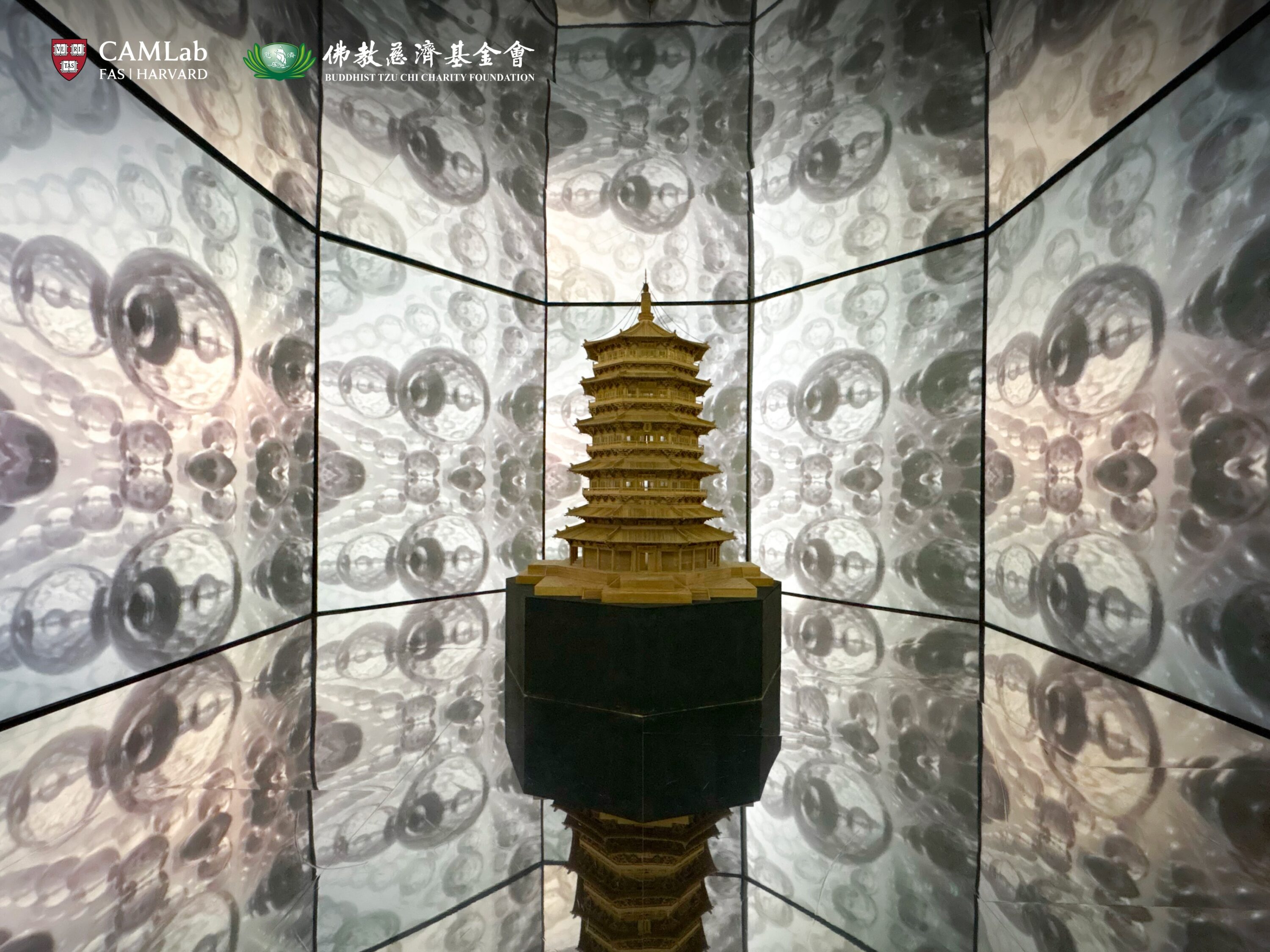
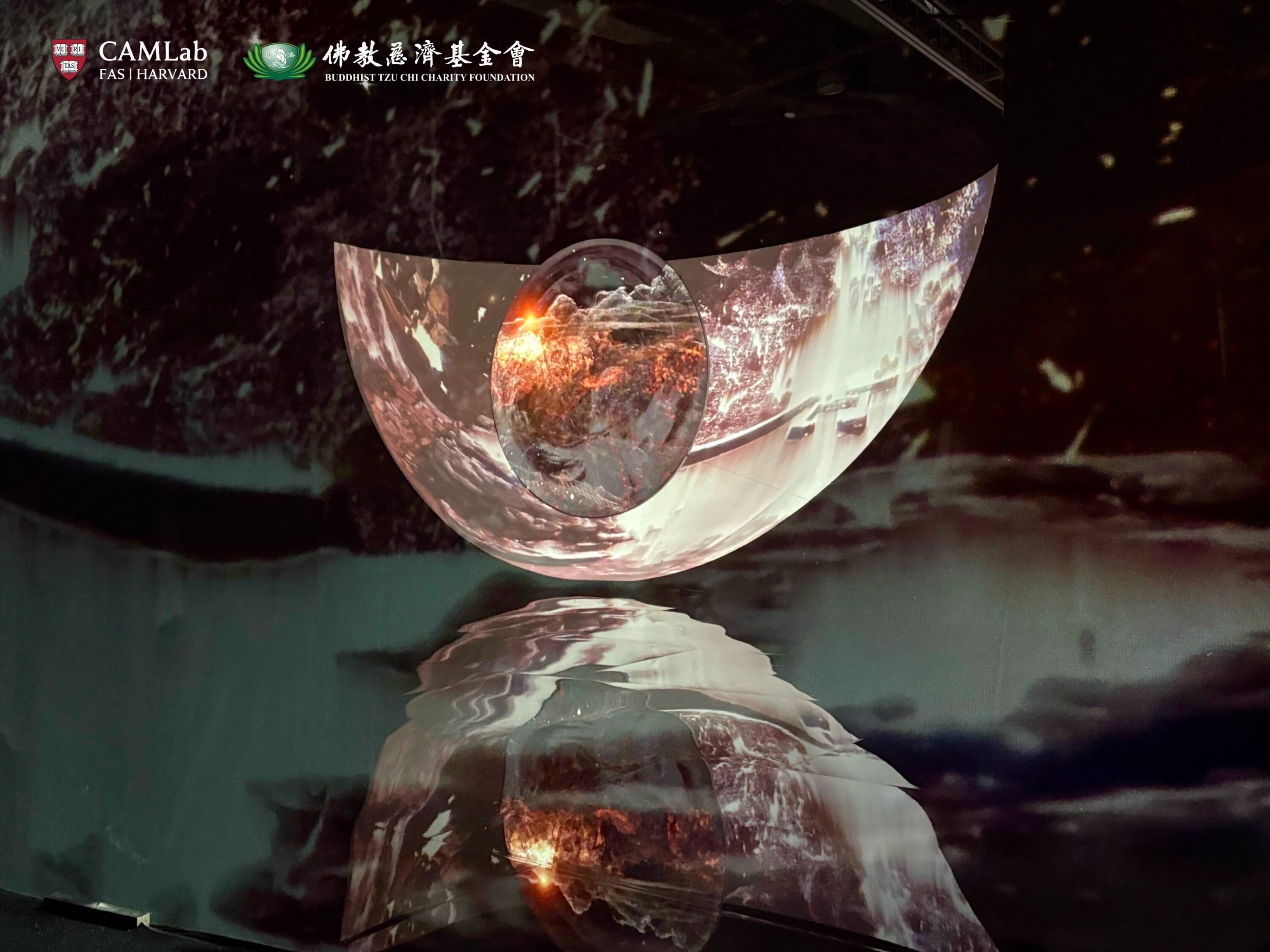
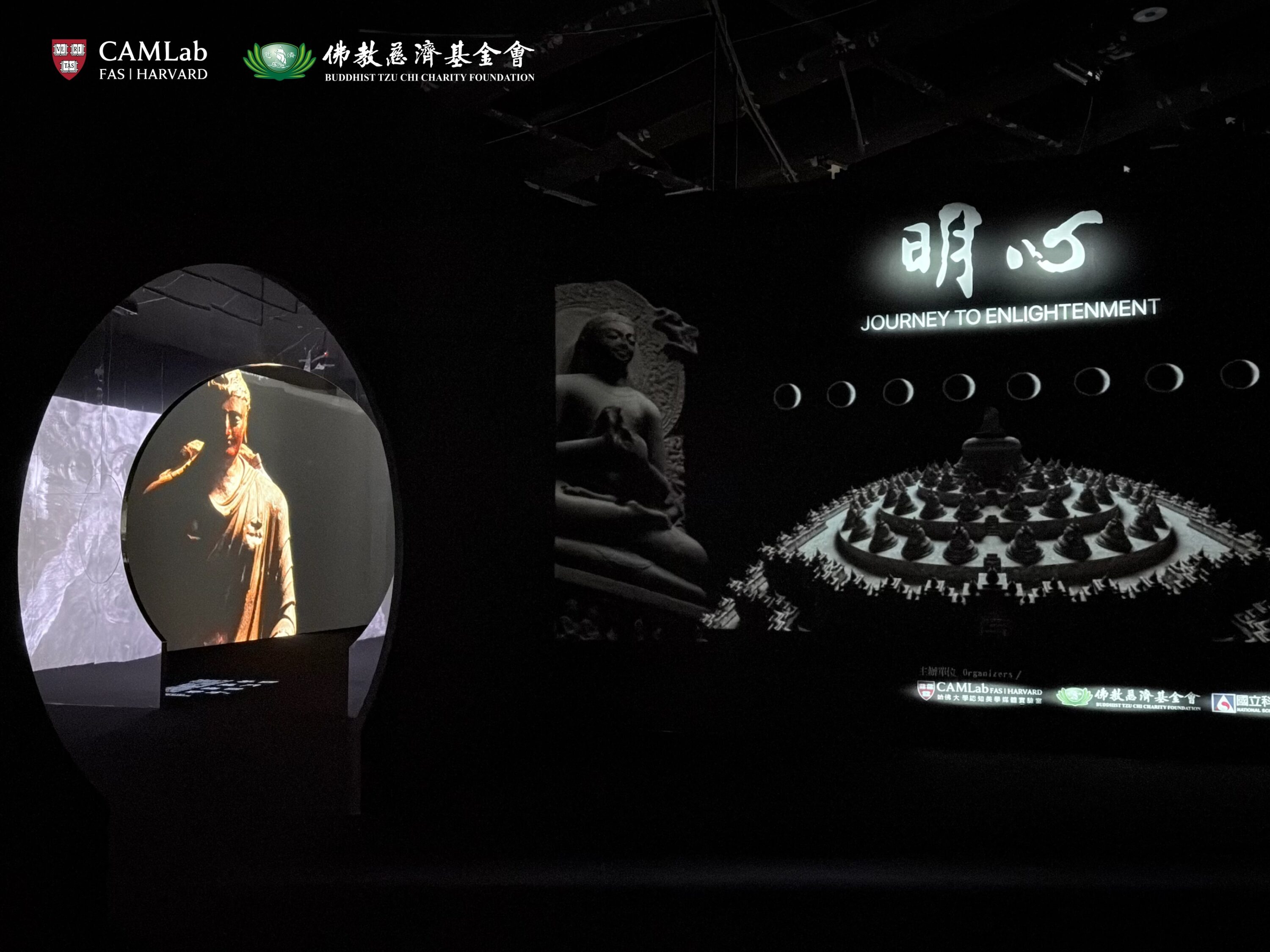
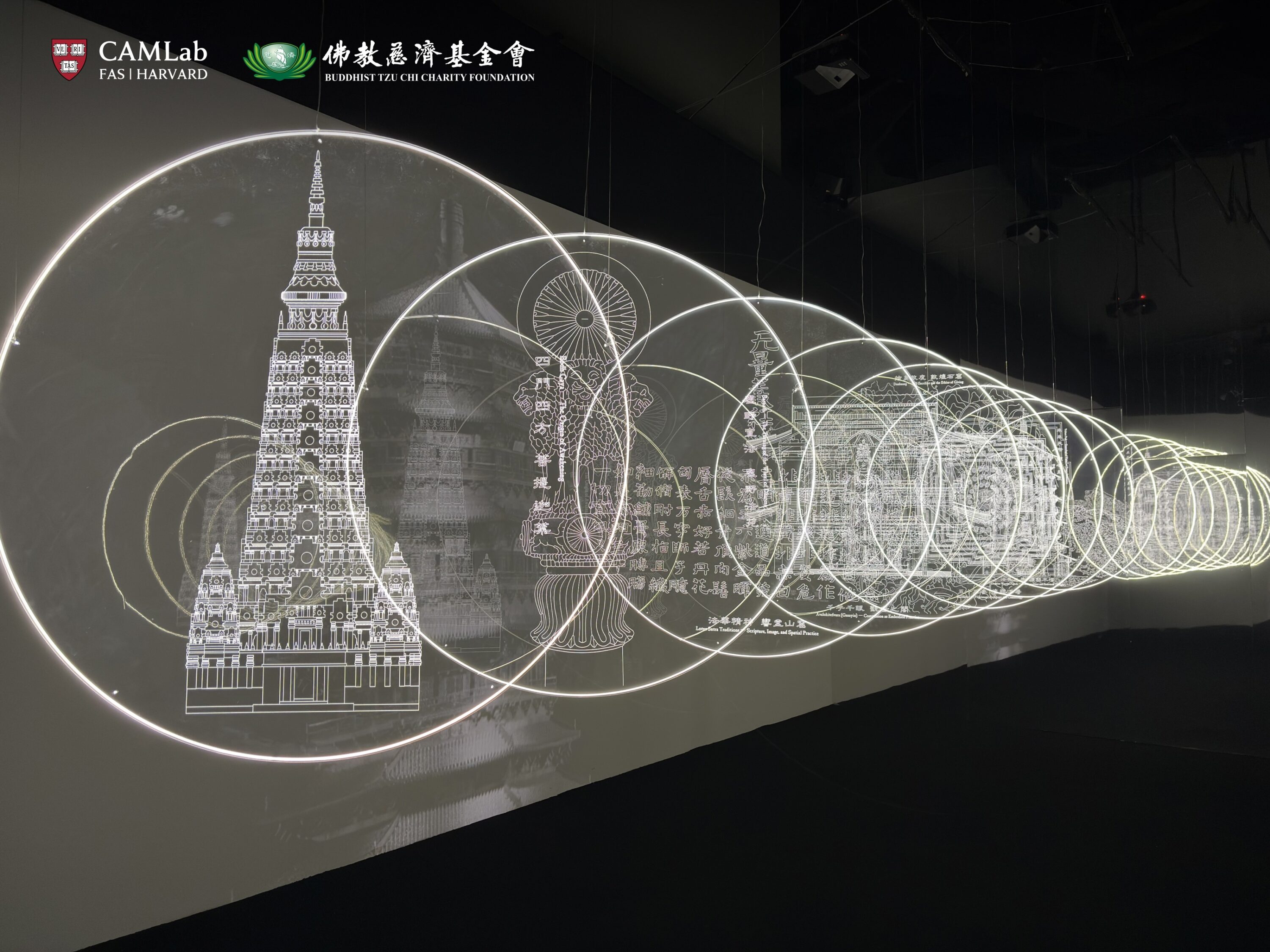
Exhibition views of Journey to Enlightenment at the National Science and Technology Museum, Kaohsiung
The exhibition’s inaugural presentation takes place at Harvard University, where visitors are invited to experience both the multimedia installation and a series of related public events, including an international symposium and a concert.
- Exhibition
- Journey to Enlightenment: A Multimedia Exhibition on Buddhist Cultural Heritage
- CAMLab Cave, Lower Level, 485 Broadway, Cambridge, MA
- May – October 2026
- Registration↗
- Symposium
- Applied Buddhism and the Contemporary Bodhisattva Path: Exploring the Future of Buddhism
- Student Organization Center at Hilles (SOCH), 59 Shepard St, Cambridge, MA
- May 7–9, 2026
- Registration↗
- Concert
- Tzu Chi 60th Anniversary Concert: Under One Sky
- Calderwood Courtyard, Harvard Art Museums, 32 Quincy St, Cambridge, MA
- May 9, 2026
- Registration↗
Advance registration is required for the exhibition and events above.
Following its U.S. debut, the exhibition travels to Taiwan, where it will be presented at the Jing Si Hall in Hualien, the spiritual and cultural center of the Buddhist Tzu Chi Charity Foundation.
- Venue
Tzu Chi Jing Si Hall, Hualien - Dates
May 10 – December 15, 2026
The exhibition will also be presented at the National Science and Technology Museum, expanding its engagement with broader public audiences in southern Taiwan.
- Venue
National Science and Technology Museum, Kaohsiung - Dates
August 1 – November 1, 2026 - Address
No. 720, Jiuru 1st Rd., Sanmin District, Kaohsiung City, Taiwan
For Taiwan venues, visitor information, opening hours, and any required registration are announced through the Buddhist Tzu Chi Charity Foundation’s official website.
Journey to Enlightenment: A Multimedia Exhibition on Buddhist Cultural Heritage unfolds across three international venues, inviting audiences to engage with Buddhist history, philosophy, and contemporary practice through immersive media and public programming.
We invite visitors to follow updates from both CAMLab and the Buddhist Tzu Chi Charity Foundation for the latest information, and to join us in this cross-cultural journey—from ancient sites of awakening to contemporary expressions of compassion in action.